Blog
Pickled Myoga (myoga no amazuzuke)
Sweet-and-Sour Pickled Myoga
In a nutshell
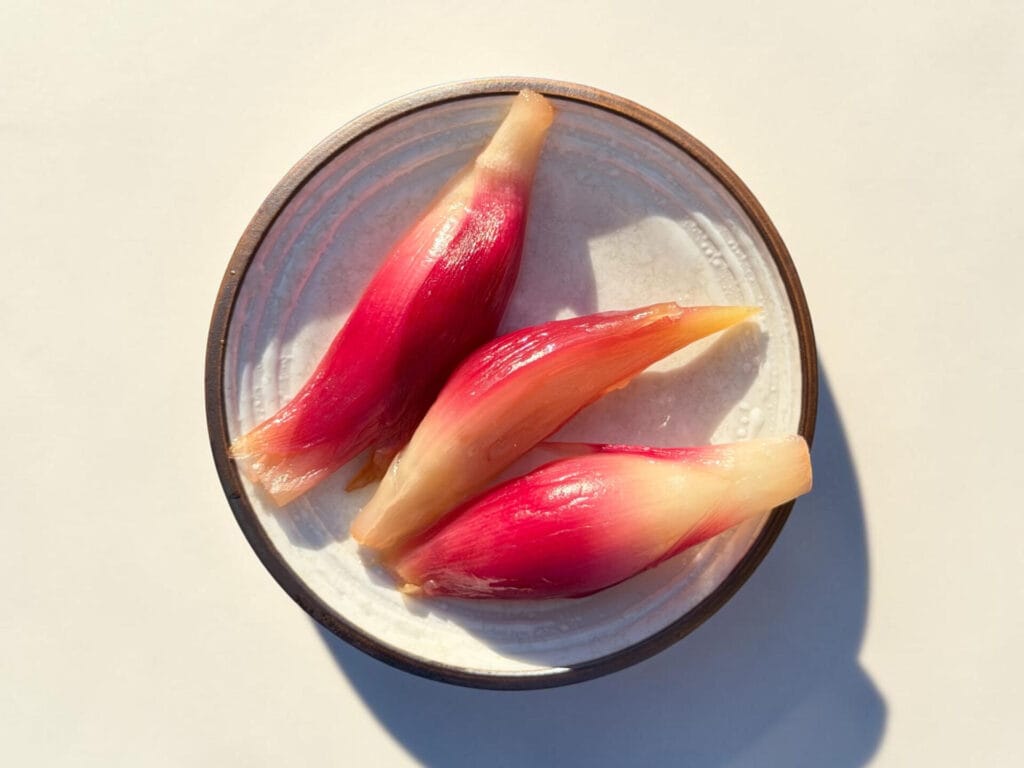
Pickled myoga (pickled myoga), known in Japan as Myoga no Amazuzuke (Sweet-and-sour pickled myoga), is a traditional way to preserve myoga and really bring out its fresh flavor. Amazuzuke literally means something like ‘pickled in sweet vinegar’: amazu is sweet vinegar and zuke refers to canning or pickling.
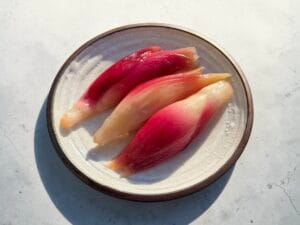
Myoga (Zingiber mioga) belongs to the ginger family, but unlike with regular ginger, you don't eat the rhizome. Instead, it's the young, still-closed flower buds that are harvested. They're crisp and juicy, with a fresh, aromatic A flavor reminiscent of mild ginger, citrus, and a hint of shallot.
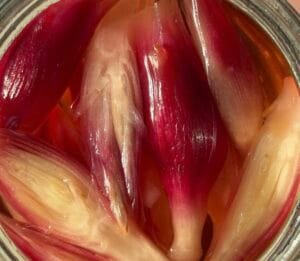
When you marinate myoga in rice vinegar, sugar, and salt, its flavor becomes a little milder and more pleasant sweet and sour, while the buds retain their crisp bite and often beautiful pink-purple colors. Pickled myoga is delicious as a refreshing accompaniment to rice, sushi, and sashimi; tofu; cold noodles; grilled fish or vegetables; in salads; or as a small pickled side dish (tsukemono) with a (Japanese) meal.
Ingredients and supplies
- about 100 grams of myoga (about 6 pieces)
- 200 ml (unseasoned) rice vinegar
- 80 g sugar
- 4 g salt, or to taste
- heat-resistant pot suitable for brining (spotlessly clean, boiled)
Preparation
- Wash the myoga and trim off any dry or damaged ends, if necessary.
- Leave the myoga whole or cut them in half lengthwise, whichever you prefer. For this recipe, we cut them in half; this makes them easier to eat, especially if the myoga are larger, and it also helps the pickling liquid soak in faster.
- Bring a pot of plenty of water to a boil. Add the myoga and blanch them for 15–20 seconds. Remove them from the water immediately and drain them well. Blanching makes the myoga slightly softer and milder in flavor and helps bring out its beautiful pink color. You can also skip this step; the myoga will then remain crunchier, with a sharper and slightly fresher flavor.
- Put the rice vinegar, sugar, and salt in a small saucepan. Heat gently and bring to a gentle boil until the sugar and salt have completely dissolved.
- Place the myoga in a clean, heat-resistant jar (such as a Weck jar). Make sure the jar is thoroughly sanitized—for example, by boiling it beforehand.
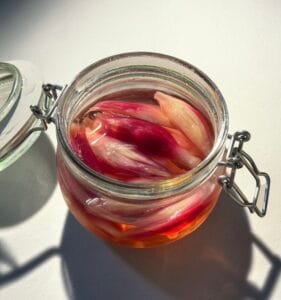
- Pour the hot vinegar mixture over the myoga. Make sure the myoga are submerged as much as possible. You can add more myoga as long as they are completely submerged in the liquid. This also depends on the size of your jar; you’ll need less liquid in a narrow jar than in a wide one. If the myoga aren’t completely submerged, simply make some extra pickling liquid using the same ratio or add fewer myoga.
- Let it cool (about an hour), close the jar, and put it in the refrigerator.
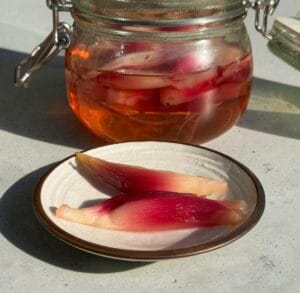
- Let it steep for at least 24 hours; after 2–3 days, the flavor and color are usually even better.
Tips
In the refrigerator, you can usually keep the pickled myoga 2–3 weeks They’ll keep well, as long as they’re always completely submerged in the preserving liquid, you use clean utensils to remove them, and you’ve cleaned the jar thoroughly beforehand. If they smell strange, the liquid becomes unusually cloudy, or you see mold, throw them away.
The brine solution It's really delicious; it has absorbed the flavor and color of the myoga. You can use it, for example, as dressing or sauce base, mix with rice or noodles, or serve over cucumber or slice the radishes as a quick side dish. Just make sure the myoga remain completely submerged in the liquid when you take some out to use.
The myoga we sell weigh about 33 grams each, which makes them quite large (For example, many myoga buttons weigh around 15 grams each.) For smaller myoga, the recipe remains the same; in that case, pay close attention to the total number of grams rather than the number of pieces listed in the ingredients.