Blog
Red Pickled Daikon (Rettich)
Red Plum Vinegar Daikon
In a nutshell
Pickled Daikon (大根の漬物) is a classic Japanese pickled side dish (tsukemono) made from daikon (rettich), a large white radish commonly used in Japanese cuisine. When the daikon is pickled in a mixture of rice vinegar, sugar, and salt, it takes on a delicious fresh, sweet-and-sour flavor, while he was doing his signature crispy texture A simple yet flavorful side dish that is often served with rice dishes, miso soup, or as a refreshing contrast to rich, hearty dishes.
For this special variation, we replace the salt with umezu, a traditional Japanese ume ‘vinegar’ produced during the pickling of umeboshi. The added red shiso leaves give this liquid its beautiful deep red color and a spicy aroma. Umezu is not technically a true vinegar and contains a lot of salt. This not only gives the daikon a beautiful color, but also a an extra dimension of flavor with the fruity, slightly tart notes of ume and the distinctive herbal aroma of shiso. Due to the high salt content of the umezu, this variety is slightly saltier than a regular sweet-and-sour daikon pickle.
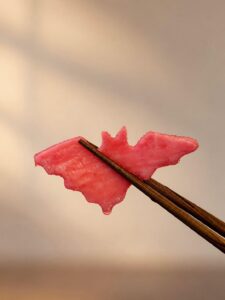
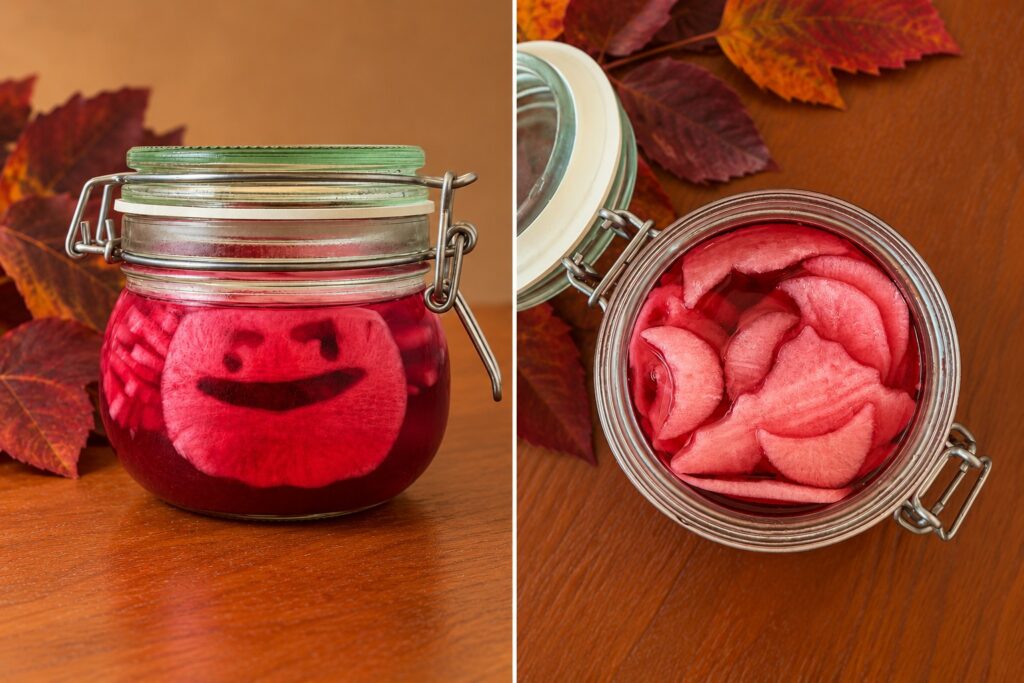
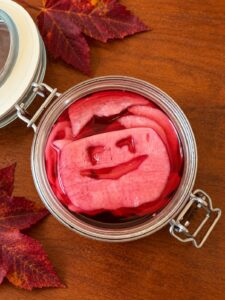
The result is a delicious a crisp, fresh and sweet, slightly tangy, and savory pickle which adds both flavor and color to your meal with little effort. Its striking red color also makes this daikon especially fun for special occasions, such as Halloween or the Japanese cherry blossom season. Plus, with small cookie cutters, you can easily customize the daikon to fit the theme and make it extra special.

Ingredients and supplies
- 200 g daikon, peeled
- 100 ml of aka umezu (red ume (Japanese plum) ”vinegar”)
- 65 g white granulated sugar
- 120 ml unseasoned rice vinegar
- 80 ml water
- heat-resistant pot suitable for brining (spotlessly clean, boiled)
- optional: cookie cutters
Preparation
- Cut the daikon into half-moons (cut a slice in half) about 3–4 mm thick. You can also use cookie cutters to cut shapes out of the slices. Think of a little skull or pumpkin for Halloween, or sakura in the spring.
- Put the rice vinegar, water, and sugar in a small saucepan. Heat over low heat and stir until the sugar has completely dissolved. Then let the mixture cool.
- Stir the red umezu into the vinegar-sugar mixture.
- Place the daikon in a clean, sealable glass jar and pour the pickling mixture over it. Gently press down on the slices so they are completely submerged in the liquid. If there isn’t enough liquid, make some additional pickling mixture using the same proportions.
- Seal the jar and place it in the refrigerator. Let the daikon marinate for at least 24 hours, but preferably 48 hours for a more attractive reddish-pink color and a well-developed flavor.
- Remove the daikon from the brine, let it drain briefly, and serve. The daikon is deliciously crisp, fresh and sweet, and slightly tart, with the distinctive fruity and spicy aromas of ume and red shiso.
Tips
The beautiful color comes from the natural pigments in red shiso. It’s best to let the daikon marinate for 2–3 days to achieve a more intense color. The amount of umezu used largely determines how intensely the daikon turns color. If you want a deeper, reddish-purple color, for example, for Halloween? In that case, use more umezu and reduce the amount of water (keep in mind that this will also make the pickle saltier). For a soft, light pink color, for example, during cherry blossom season, you can actually use less umezu and add extra water. The pickling time also plays a role: the longer the daikon sits in the brine, the more color it usually takes on.
Save Store the daikon in the refrigerator, completely submerged in the brine. Always use clean utensils, and it's best to eat the pickles within 5–7 days. This recipe is intended for quick refrigerator pickles, not for long-term storage outside the refrigerator.