



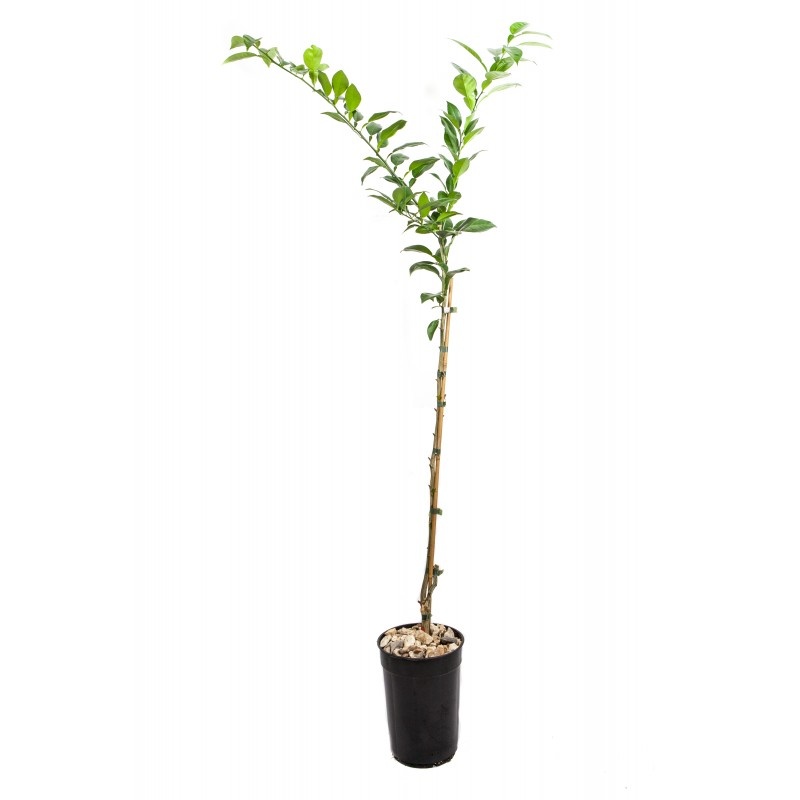




Bergamot tree (Citrus bergamia) - 80-120 cm
€ 79,00 incl. VAT
This particular Citrus is best known for Earl Grey tea. These trees usually produce the first fruits within 2 years. Hardy.
Op voorraad
Description
Note: also read the points of interest under the heading “shipping”
Also known as Citrus bergamia, this Bergamot lime tree is grafted onto Poncirus trifoliata. This is one of the most hardy citrus trees available.
The trees are suitable for growing indoors or outdoors in pots. After two years from purchase, they can also be planted in the open ground. They bloom in spring and, depending on the weather, they produce fruit within two years.
All trees are between 80-100 tall (including pot) and were grafted at least 3 years ago.
For trees kept outdoors, we recommend planting them in a pot for the first two years and placing them in a sheltered spot in winter and protecting them from frost. Then plant the tree in the spring in the full ground. We also recommend protecting the tree from severe frost for the next three years by wrapping it, for example.
Bergamot is an unusual hybrid citrus fruit, originally from Asia but known from Italy. It is probably a cross between a lime and a bitterlemon. Of this fruit, mainly the peel is used for its fragrant oils. Although the leaves can also be used as a flavoring. There also exists a bergamot herb whose leaves are mainly used.
Bergamot is also known from Earl Grey tea. Earl Grey is a black tea flavored by the oils from the peel of bergamot.
Breeding Guide
Legs
Plant the tree outside in a sunny, south-facing, sheltered spot. Provide loose soil. Clay soils should be mixed with sand to allow for good drainage. In dry conditions, water once or twice a week. The tree does not like constant wet feet.
In a pot, use free-draining compost, extra perlite or bark to improve drainage. Repot the plant every 1-2 years.
Bloom
Flowering begins in the fall. However, most of the flowers will fall out after some time. In this way, the plant regulates the number of fruits it can bear maximally. For the first few years, the advice is to remove as many flowers/fruits as possible. This way the plant has more energy to grow. In addition, many of the branches are still too weak to bear fruit.
In a harsh winter, the flowers will not all survive and fall off.
Maintenance
To promote growth and health we recommend giving citrus or olive tree nutrition. If you choose a liquid variety you will administer nutrition more frequently. Grains need to be applied less frequently. Apply granules in the spring and again in the summer. These are the period when the plant is most active.
The most common pests are aphids and mites. In a garden with a lot of other plants, natural enemies will be plentiful. In addition, you can spray the plant with water and a few drops of dish soap if these pests get too out of control.
In spring, all new shoots grow out. This is the time to form the plant. Below are two videos that explain well how to do this.
Beware of the sharp spines. These can be removed if they are a hazard.
Harvesting
The fruits are ripe when they begin to turn yellow. This usually happens in late summer. They can be harvested green.
Shipping
The trees are pruned for transport. The trees are then shipped with the utmost care in a large plant box. However, it may happen that a branch breaks. Don't worry, the tree will make new shoots within the few months.
These are large trees they are therefore shipped with a separate DHL shipping service. This usually offers the package twice. Should it fail to deliver the package in these two times, it will be returned. Most pickup locations do not accept the package.