If you love Japanese cuisine and its vibrant flavors and authenticity, then you've probably heard of miso. This amazing flavoring is a staple of Japanese cuisine and it is as old as Mount Fuji.
However, miso (especially in the West) is still sometimes surrounded by mystery. If you're a regular at your local Japanese restaurant, we're sure you've eaten this ingredient before. But when it comes to cooking with it, not everyone is so adventurous. That ends today, as we tell you everything there is to know about miso. Get ready for a delicious ride!
Miso is a fantastic condiment and from Japan. Like most things Japanese, this particular paste originated in mainland Asia, in China. Introduced to Japan more than 1,300 years ago, today we can't think of Japanese cuisine without it.
Miso originated from an ancient way of preserving soybeans. By mixing the legume with salt, rice or barley, and the famous koji fungus (also responsible for soy sauce and sake!), people naturally fermented the paste, extending its shelf life and creating the complexity and flavor of miso.
Japanese noble families considered this specialty a true delicacy, and from there it penetrated the working class. Today, you can find miso in every Japanese household, and given its versatility and unique taste, you can now find it in more and more countries.
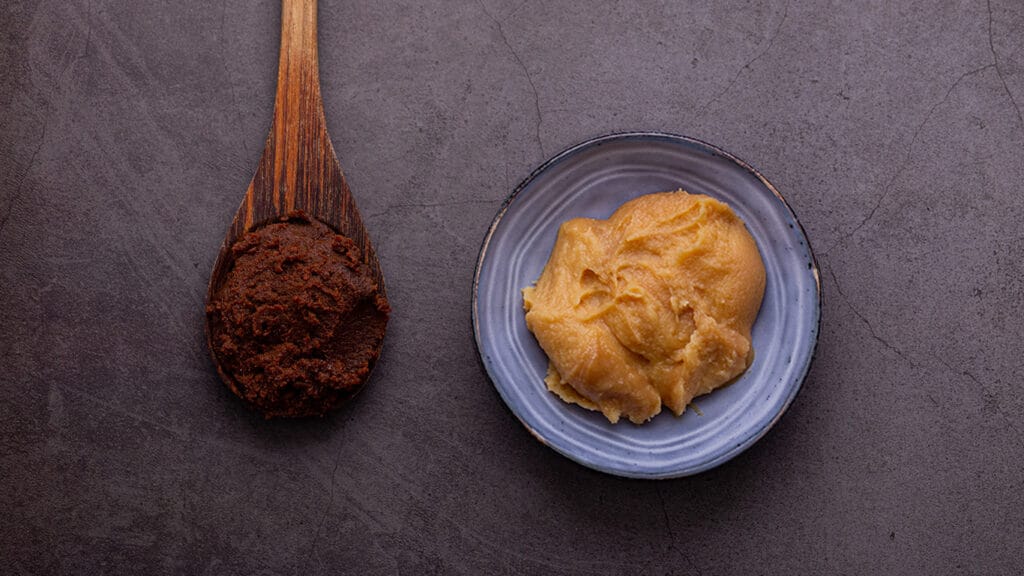
There are more than a thousand regional miso varieties. Still, you can roughly categorize miso into two main types; white miso and red miso.
Shiromiso or white miso is the mildest and gentlest style. It originates in the region around Kyoto. It is a light slightly sweet miso. But make no mistake, it is still a mild but salty flavor. White miso is made from more rice than soybeans and is briefly fermented. It therefore generally a young miso
A great example is Kyoto-style white miso from KATŌ MISO.
Akamiso or red miso is the most intense, salty and even funky style of miso. The special umami flavors in the paste are intense and created after lengthy fermentations. The miso is made with more barley and soybeans.
A great example is the red miso KATŌ MISO: Inaka brown miso.
Once you're excited about miso, you have to choose one; that's pretty tough. There are hundreds of different producers, so how to choose?
For the best quality, look for miso that contains only the necessary, natural ingredients, including rice, barley, soybeans, salt and koji starter. Some may have some other natural ingredients added such as yuzu, depending on the style, and those are fine, too.
Avoid miso with artificial flavors, preservatives, dyes and other additives. This is mostly miso produced on an industrial scale, and while they may be cheaper, they are not as complex and flavorful as authentically produced miso.
Like the rest of our carefully selected products, all of our miso, come from authentic, high-quality producers who make miso using time-intensive, traditional methods.
Cooking with miso is easy. And the more often you use it, the more comfortable you will feel. It goes without saying that miso is the main ingredient in a delicious miso soup or a beautiful broth. Miso offers limitless possibilities.
White miso, delicate and not too overpowering, is ideal in soups. In addition, it can fit well into dressings and light sauces to enhance flavors, and it is a delicious marinade for fish and vegetables.
Red miso is more fatty and intense, which means it is the perfect flavoring for savory foods, rich broths and meats. Roast marinated red meat and or poultry and you'll be amazed.Make miso your secret ingredient! Cooking with miso is a lot of fun. It opens the door to endless new flavors and adds depth and complexity to both simple everyday meals and elaborate recipes for special occasions.
Miso is not the most popular flavoring on earth (yet), just because not everyone knows about it, but it is rapidly gaining popularity. Make miso your secret ingredient and surprise your guests.
No account yet?
Create an AccountWe use cookies to ensure the online store works properly and to see which of our Japanese specialties interest you. This way, we can show you more of what you like and less of what you’re not looking for. Is that okay with you? You can always decline or change your settings later.