



Blog
Interview with Founder Sander van Kampen

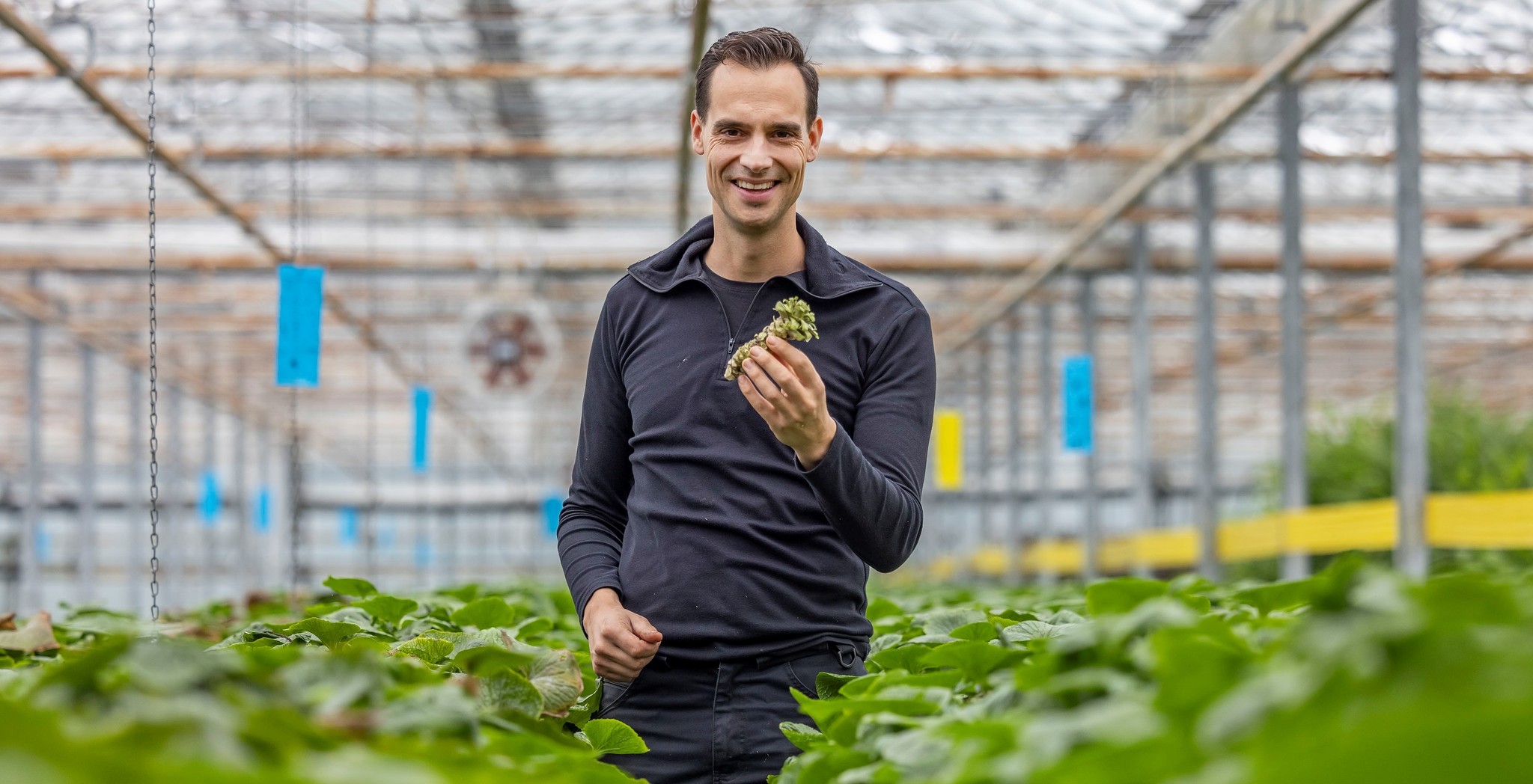
Author: Charlotte Hamilton. Photography: Thierry Schut
Dutch wasabi was the first company in the Netherlands to start growing wasabi and other special products. Sander van Kampen traded office life for rock hard toil in the gardening sector: “growing a standard product like a tomato would not suit me, I am not driven by that.”
Sander van Kampen is the man behind Dutch Wasabi. In 2016, Dutch Wasabi was the first in the Netherlands to start growing wasabi, a plant that presents many challenges. Today, in addition to wasabi, Dutch Wasabi grows myoga, shiso and ginger. No ordinary products, then: “I've always had a love for creating something with which to amaze, surprise or delight someone, whether it's taking a picture or selling a product. Growing a standard product like a tomato wouldn't suit me, I'm not driven by that. I wanted to do something that would surprise people. Besides, I found it immensely challenging that people said it won't be anything”. Turning your life around and doing something completely new. Guts? Not at all in Sander's opinion. Just proactively organize your own life and create your own happiness.
Seeing opportunities
“In an article in a Dutch magazine I learned about imitation wasabi,” the green stuff that consists mainly of horseradish, sugar, starch and dye, “I was intrigued by the article that also told about the complicated growing process and the possibilities of growing it in the Netherlands. I saw an opportunity there”. Despite the lack of experience and knowledge about plants, a plan developed in Sander. “I thought: if I can rent a greenhouse and get plants I'm just going to do it,” he said. After a long search, he found plants in England and was able to find a modest greenhouse of about 100 square meters.
Sander rolled up his sleeves and in 2016 the first plants came into the greenhouse, two years later in 2018 there was a first wasabi harvest and at the end of the same year Sander continued with two partners. The following year Dutch Wasabi moved to a larger greenhouse and gradually added other products. “Something comes my way that I think is really cool and I want to experiment with it. I would prefer to plant a thousand plants right away to test it, but of course a thousand plants is not a test,” Sander says, laughing. “Ginger is one of the successful experiments that is going well and has had a lot of good reactions.”
"...throwing away the whole crop, a lot of things not working out at all, having to deal with a virus or pest. “Those very moments make the moments when things do work out more than worth it..."
Challenges
The fussy plant is grown in Japan mainly in a flowing mountain river. For an experienced grower, wasabi is already not an easy plant to work with, let alone for an inexperienced grower. How to satisfy that critical plant grown in pots? “Being a pioneer in the business, I had no examples. It all started with research. Hours, what do I say-days at a time I sat reading, trying to gather all the possible information I could find about the plants.” He found a way to grow the plants, in the most sustainable way possible, with clean and mineral-rich water.
Then all the other challenges that growing plants brings came around the corner: “EC (salinity), PH (acidity), substrates and complicated terms like that, I had no idea,” Sander says now, laughing, but he had to endure a lot before he could harvest his first plants. “The first time, most of the plants didn't survive. All the plants I had in front of me could have gone,” yet he did not flinch. After two years, the first plants could be harvested: “Barely 10 kilograms I had in front of me, still I was happy, it was a start.”
Doing business as Dutch Wasabi is not always pleasant: throwing away the entire harvest, a lot of things that don't work out, dealing with a virus or plague. “Those very moments make the moments when things do work out more than worth it: when you have a fruit in your hands, taste something or can get a chef to taste something, then you know what you're doing it for. It's those highs and lows that make entrepreneurship so beautiful. Making someone happy with your product is fantastic to me.‘ Sander works a lot more for Dutch Wasabi and for less money than his former job as an IT consultant, but it's all worth it: ’It's incredibly motivating work and it makes me happy.”.
By now with two partners, Elstgeest pot plants and Duijvestijn Tomatoes, who support him with knowledge, their network and as a sparring partner. He considers himself fortunate with all the support from his personal environment and from suppliers.
“Every journey begins with a first step. I had a goal in mind and at the time didn't know exactly how to get there...."
The future
Sander knows the direction he wants to go. “I'm very proud of where we are now. We have more and more great products that are running well and several more special new products in the pipeline. “We see ourselves as the Japanese/Asian kitchen garden for (home) chefs.”
Every year we make steps forward, we test a lot and thus invest in a sustainable future of wasabi cultivation in the Netherlands.” He may never have dared to dream that when he occasionally had to throw away an entire crop in the first few years. “Every journey begins with a first step. I had a goal in mind and at the time didn't know exactly how to get there. If I knew what challenges I would face, I might never have started this business, but we just took it day by day and now here we are.”
What the future plans are? Maybe a more modern garden where different products are grown in one place with next to it a fine dining restaurant where people can enjoy and be inspired.... There are many ideas but all step by step. But looking at the story of Dutch Wasabi so far, anything is possible.
Curious about more?
On the page ‘Our Story’ read more about what Dutch Wasabi stands for and our identity as a grower and Japanese shop.
On the page ‘All about real wasabi’ you will discover much more about this special product (such as culinary applications) and why growing it in the Netherlands is such a challenge.
On the page ‘In the media’ you will find an overview of where Dutch Wasabi has appeared in the media so far. In addition you will find videos and reports that give you a behind-the-scenes look at us.
Follow us on Instagram and Facebook and sign up for our newsletter (bottom left of the page). This way you can always stay up to date with the latest news such as promotions and offers, new products, blogs and recipes, fresh seasonal crops, the (Japanese) markets where we can be found and interesting facts about our products.
Click here to purchase our fresh wasabi products.